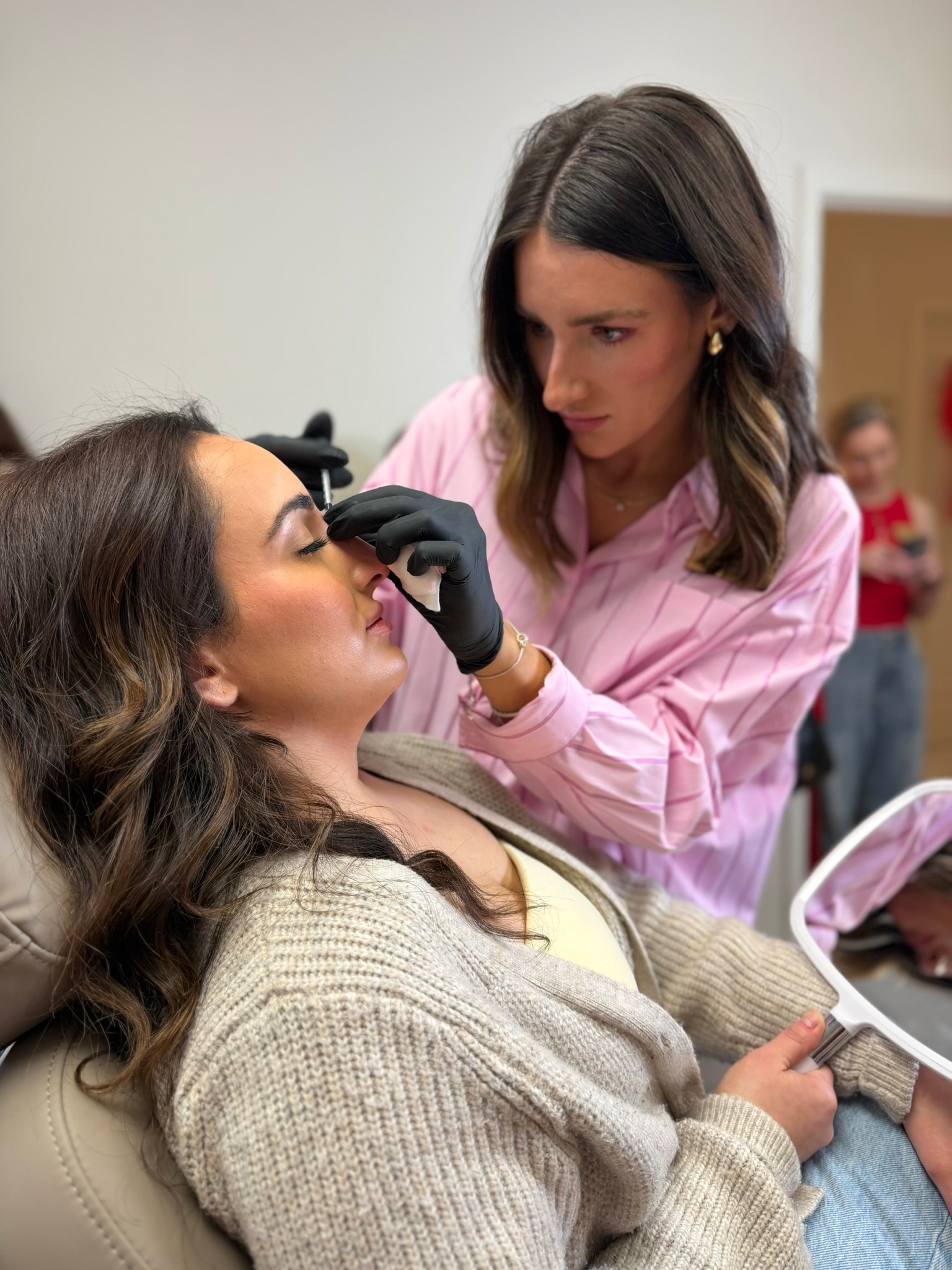

It is one of the most common questions we hear, and honestly, it is a great one to ask. Botox and fillers are both injectable treatments. They are both quick, they both deliver beautiful results, and they both have zero surgical downtime. But they do very different things, and knowing which one you actually need can save you time, money, and a whole lot of guesswork.
So let us break it down in plain terms, the same way we would explain it to a friend sitting right across from us.
First: What Do They Actually Do?
The simplest way to think about it is this: Botox relaxes muscles, and fillers restore volume. Those are two very different problems with two very different solutions.
Botox and Neurotoxins
Botox belongs to a family of treatments called neurotoxins, which also includes Dysport, Xeomin, and Daxxify. When injected into a specific muscle, a neurotoxin temporarily reduces movement in that area. Less muscle movement means less creasing in the skin above it, which means smoother skin over time.
This is the right treatment for lines that form when your face is in motion. Seeing lines between your brows when you frown? That is a neurotoxin situation. Crow’s feet that fan out when you smile? Same story. These are called dynamic wrinkles, and they are exactly what neurotoxins were designed for.
One thing patients love about having options is that different formulas work better for different people. Daxxify, for example, is our longest-lasting neurotoxin and can keep results going for six months or more.
Dermal Fillers
Fillers work completely differently. Rather than relaxing a muscle, they add physical volume beneath the skin to restore fullness and structure. Think of it as giving back what time or genetics has taken away.
Lost the fullness in your cheeks you had in your twenties? That is a filler conversation. Lips that have always been on the thinner side and you want more shape? Filler. Deep lines from your nose to the corners of your mouth that are there even when your face is completely at rest? Those are called static wrinkles, and filler is usually the better tool for those.
Our injectors work with fillers for lips, cheeks, undereyes, temples, jawline, chin, nasal folds, and more.
A Simple Test: How to Tell Which One You Need
Here is a quick trick that helps a lot of people figure out where they stand. Relax your face completely. No expressions, just neutral. Now look in the mirror.
If the lines you are bothered by are still visible when your face is fully at rest, fillers are likely the better fit. If those lines mostly appear during expressions and soften when your face relaxes, neurotoxins are probably your answer.
Of course, it is not always that clear-cut. Plenty of people have both types of concerns, which is exactly why combination treatments are so popular.
A simple rule of thumb: lines caused by movement respond to Botox. Lines caused by volume loss respond to filler. If you have both, you may benefit from both.
Can You Get Botox and Fillers at the Same Appointment?
You can, and many patients do. Combining the two is actually one of the most effective ways to achieve a refreshed, natural-looking result because each treatment addresses what the other cannot.
A really common combination is neurotoxin for the upper face (forehead, brows, crow’s feet) paired with filler for the lower face (lips, nasal folds, chin, or jawline). The two work together in a really complementary way, and a lot of patients are surprised by how much more balanced the overall result feels compared to doing just one.
If you are curious about what a combination plan might look like for your face, the best place to start is a consultation. Come in, tell us everything that is on your mind, and your injector will build something that makes sense for your face and your budget.
How Long Do Results Last?
Neurotoxins: Most patients enjoy results for 3 to 4 months. Daxxify typically lasts 6 months or longer. With regular treatments over time, many patients find they need fewer units to maintain the same result as the muscles gradually soften.
Dermal fillers: Results vary depending on the product and the area treated. Lip filler typically lasts 6 to 12 months. Cheek and jawline filler often lasts 12 to 18 months or more. Biostimulators like Sculptra can last up to two years. Your injector will give you realistic timelines at your consultation based on what you are having done.
Does Age Matter?
We hear this question often, and the honest answer is that it depends much more on your specific concerns than your age. That said, there are some patterns worth knowing.
People in their twenties and early thirties who are just starting to notice expression lines often do beautifully with neurotoxins alone. Starting Botox preventively in your twenties is a real and effective strategy.
Those in their mid-thirties and beyond often start to notice both dynamic wrinkles and some volume loss happening at the same time, which is where a combination approach really shines.
And patients who feel like they have lost significant facial volume, regardless of age, are typically great filler candidates.
The best way to know for sure is to come in and have a real conversation. Nobody gets pressured into anything here. We listen, we look, and we share what we honestly think will help.
Saving on Injectables
If you are planning to get regular treatments, our membership plans are worth knowing about. Beauty Bank members receive $1 off per unit on every neurotoxin visit, and Premier and Exclusive members get 10 to 20 percent off all injectable treatments. For people who come in consistently, those savings add up quickly.
Ready to Figure It Out Together?
The best place to start is a conversation. Book a consultation and come in and show us what is bothering you. We will give you a completely honest read on what we think will help. No pressure, no upsells, just a real discussion about what makes sense for your face and your goals.
And if you want to make your treatments more affordable over time, take a look at our membership options before your first visit.
FREQUENTLY ASKED QUESTIONS
It depends on what is going on under the eye. Hollow, sunken undereyes are a volume issue and typically respond well to filler. Fine crepey skin and fine lines in the area may benefit more from PRF or EZ-GEL treatments. Some patients do best with a combination. Your injector will assess the area at your consultation and give you a clear recommendation.
Forehead lines are typically caused by muscle movement, which makes neurotoxins the better first option. Filler is occasionally used in that area for deep static lines but it is not the standard approach. Your injector will let you know what makes the most sense for your specific situation.
It varies. Most neurotoxins last 3 to 4 months, though Daxxify can stretch to 6 months or more. Fillers typically last longer, anywhere from 6 months for lips to 18 months or more for cheeks and jawline. Biostimulators like Sculptra can last up to two years.
Not when the treatment is done well and conservatively. The goal is always results that look like you on a really great day. Our injectors take a measured approach and always err on the side of doing less rather than more. You can always add more at a follow-up. Overdone is much harder to fix.
Most patients find both treatments very manageable. Neurotoxins feel like a quick pinch. Fillers take a little longer and we use topical numbing cream beforehand, plus most filler products contain lidocaine which numbs as it is injected. Most people are genuinely surprised by how comfortable the whole thing is.
The honest answer is that an in-person consultation is the best way to know for sure because every face is different. As a starting point, use the mirror test above. Lines that disappear when your face is relaxed point toward neurotoxins. Lines and hollowness that are there all the time point toward fillers. And if it is both, you are probably a great candidate for a combination approach.

Comments Off on Botox vs. Fillers: Which Is Right for You?